
How to prepare for your dog’s home euthanasia appointment
Although we don’t want to think about our dog’s passing, gentle preparation can make your dog’s in-home euthanasia appointment with Paws at Peace far more peaceful—free from fear, stress, and unnecessary discomfort.
Knowing what to expect can ease anxiety and allow you to focus on what matters most: spending peaceful, loving time with your dog and helping them feel safe, relaxed, and surrounded by love in their final moments.
Before the appointment: How to prepare
Spend the days leading up to your appointment loving them
Many families choose to:
- Cuddle on the couch or in bed
- Sit together outside if your dog enjoys fresh air
- Take a short walk, car ride or visit a favorite place (if comfortable)
- Do a few simple "bucket list" activities your dog still enjoys
There is no right or wrong way to spend this time. Follow your dog’s comfort level and energy.
Food and treats
If your dog is eating:
- Normal meals are fine
- Special treats are welcome
- There is no need to fast your dog before their appointment. If your dog is eating, they may continue to eat and enjoy treats.
- If you would like to prepare especially exciting foods (such as burgers, fries, or ice cream), we recommend saving these for when the veterinarian arrives. This allows your dog to enjoy a special “feast” without overdoing it beforehand, which could cause nausea or vomiting.
- Occasionally clients ask us if they can give their dog chocolate. Chocolate is toxic to dogs within about 30 minutes of ingestion. Please avoid chocolate until the veterinarian arrives. Once the veterinarian arrives and gives you the go-ahead you may give your dog chocolate if you like, but not before.
Where to perform the euthanasia
The procedure can be performed anywhere you like, as long as it is a place where your dog is happy and relaxed. Common locations clients choose include:
- In their bed
- On a sofa or in a human bed surrounded by their loved ones
- On a patio or in a garden, if your dog is relaxed and happy outside
Who should be present
Any humans or animals that your dog loves and who love your dog are welcome to be present, provided that their presence makes your dog happy and relaxed.
Special touches
Some pet parents choose to include special touches, readings, or rituals as part of their home euthanasia appointment. Others choose simply to be with their pet in love. There is no right or wrong, but some ideas for honoring your pet are:
- Lighting candles or incense
- A short reading or poem
- Saying a prayer together
- Surrounding your pet with flowers, crystals, or other ritual objects
When we arrive at your home
Every dog is different, and we tailor our approach to your dog’s personality.
For social, people-friendly dogs
If your dog enjoys meeting new people:
- We will greet them gently and warmly
- We'll offer affection and speak calmly
- If they want treats, we can offer them
- Our goal is for your dog to be relaxed, happy, and comfortable with us
For shy or nervous dogs
If your dog is more reserved or anxious:
- We will enter quietly and calmly
- We will act as though we are simply visiting as a friend
- We may sit down and talk softly rather than approach directly
- We allow your dog to set the pace
Our intention is for your dog not to feel that “the vet is here,” but instead to feel that nothing unusual or stressful is happening.
The euthanasia process
Once everyone is settled and your dog is comfortable, we will explain each step and answer any questions. There is no rushing—this time is yours.
How the process begins
In most cases, the process is two little injections, but depending on your dog’s personality, size, and medical needs we occasionally start with an oral medication first.
Option 1: Two Injections (Most Dogs)
For most dogs, the process involves two injections:
- The first injection is given using a very small needle, allowing your dog do become sleepy and relaxed
- Most dogs do not notice this injection at all, especially when distracted with petting or treats
- Your dog slowly falls asleep over 5-10 minutes
- Once your dog is fully asleep and comfortable, the final medication is given, allowing them to pass peacefully.
Option 2: Oral Gel First, then two injections
For dogs who are more nervous, needle-shy, very small, or easily stressed, we sometimes begin with an oral calming gel before any injections.
- The gel is placed directly on your dog’s gums or inside their mouth
- If your dog is eating, it can also be placed on a treat
- Over about five minutes, the gel causes your dog to feel relaxed and sleepy
- This approach can greatly reduce—or completely eliminate—the chance that your dog feels any needle
The gel can be administered by us or by you, depending on what feels most comfortable. Once your dog is fully relaxed, we proceed gently with the injections. Our goal is always for your dog to feel safe, calm and at peace.
Dogs who are aggressive or may bite
If your dog has a history of aggression or biting, please let one of our care coordinators know ahead of time so we can make a thoughtful plan to ensure everyone’s safety.
In most cases, using the oral calming gel allows the appointment to proceed safely and peacefully.
In rare situations—if:
- Your dog cannot safely receive the calming gel
- Will not eat treats containing the gel
- And it is not safe for anyone to place the gel directly on their gums
We may recommend briefly using a muzzle to ensure safety. This is uncommon and only suggested when truly necessary.
After your dog has passed
Prior to your appointment, consider what you want to do with your pet afterwards. Most clients choose to have us handle the aftercare. We offer two options:
- Private aquamation - you get your dog's ashes back in an urn of your choosing. The urn can be engraved with your dog's name or some words.
- Communal aquamation - you do not get your dog's ashes back - they are scattered on a farm in upstate New York.
In addition to aquamation, we offer other options to honor your dog, including:
- Clay and ink paw prints
- Cremation jewelry
- Diamonds made from your dog's ashes
Frequently Asked Questions
Do I need to fast my dog before euthanasia?
No. Dogs do not need to be fasted. If your dog is eating, they may eat normally and enjoy treats.
Can I hold my dog during euthanasia?
Yes. Most dogs are held, petted, or resting in their favorite place during the process.
Will my dog feel pain during euthanasia?
In most cases no, although a tiny needle is involved which occasionally causes a small sting (like a bug bite or vaccine). And even if they do feel a tiny sting from the needle, once the medications we use start kicking in, the medications take away all your pet’s pain and induce a sense of happiness and relaxation as your dog slowly falls asleep.
How long does the appointment take?
Appointments are unhurried and typically last 30-45 minutes.
How will I know when it’s the right time?
This is one of the hardest questions pet parents face, and there is rarely a single “perfect” moment. Instead, the right time is often when your dog’s bad days begin to outnumber the good, or when their quality of life can no longer be maintained despite love and care.
If you are feeling unsure, you do not have to decide alone. Many families find the following resources helpful:
Our Quality of Life Quiz, designed to help you objectively assess your dog’s comfort, happiness, and daily functioning.
A teleconsult with one of our veterinarians, where you can talk through your dog’s condition, symptoms, and your concerns in a supportive, non-urgent setting.
Our in-depth article, “How Will I Know When It’s Time to Say Goodbye?”, which walks through common signs, emotional considerations, and decision-making guidance.
You are not expected to have total clarity right away. Seeking guidance is a sign of care, not doubt.
I feel overwhelmed and need help. Do you offer any resources?
This is totally normal. Many people experience intense emotions before their dog’s euthanasia appointment, including guilt, doubt, sadness, anxiety, or a sense of panic. This is often called anticipatory grief, and it is very common. Feeling this way does not mean you are making the wrong decision. It means you love your dog.
Many people seek support at this stage, before the loss of their pet. We have partnered with Christine Galotti, LCSW, a pet loss grief counselor, to help. To learn more or book a session with Christine, click here.

Final Thoughts
Preparing ahead allows your dog’s final moments to be gentle, quiet, and filled with comfort—at home, with you, and without fear.
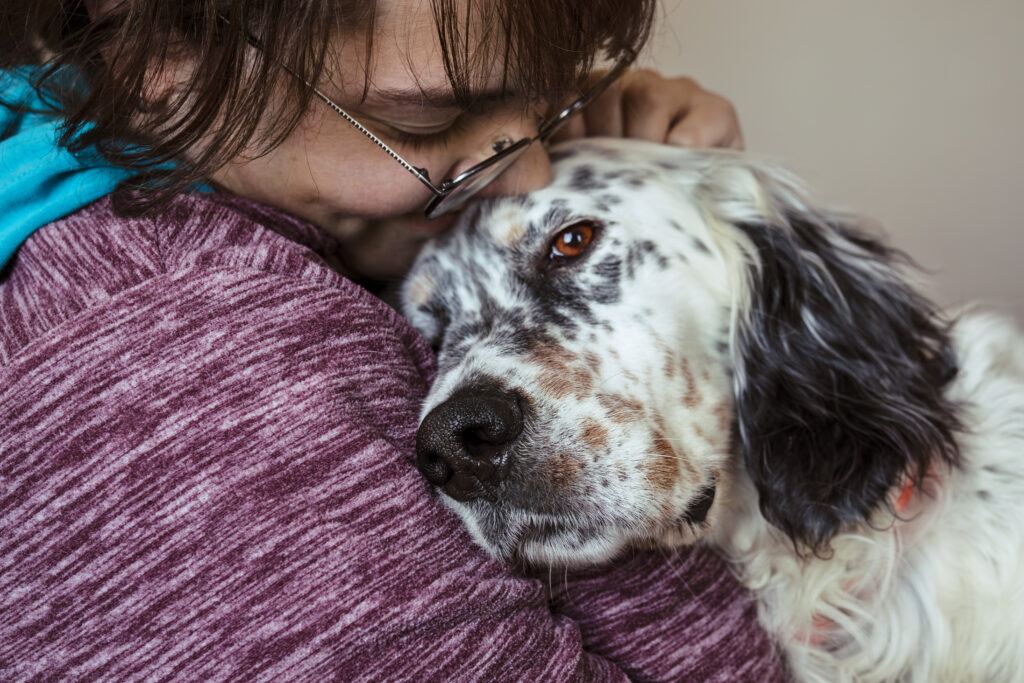
At Paws at Peace, it is our honor to help you care for your dog with compassion until the very end.